
4 Common side hustle mistakes (and how to avoid them before you start)
I say we chip in and get her a laptop pillow.
Every January, I see the same thing happen. Someone gets excited about starting a side hustle.
They spend three weeks designing a logo. They buy a domain name. They open Instagram, TikTok, Facebook, LinkedIn, Pinterest, and YouTube. They order business cards.
And then...
They never actually sell anything.
Starting a side hustle isn't usually hard because people lack ideas. It's hard because beginners tend to solve the wrong problems first.
In this guide, I’ll walk you through some common side hustle mistakes and, more importantly, how to avoid them before you start.
Mistake #1: Preparing instead of helping someone

Let's pitch in and buy them a bulletin board.
One of the most common mistakes I see isn't choosing the wrong side hustle. It's believing you have to have everything figured out before you're allowed to begin.
I've watched people spend weeks trying to choose the "perfect" business idea. Then they design a logo, build a website, create social media accounts on five different platforms, and spend hours thinking about brand colours.
A month later, they still haven't offered anything for sale.
Meanwhile, someone else creates a simple flyer, tells a few people they're available, and lands their first paying customer.
Guess which person learns faster?
The second one.
That's because side hustles don't grow through planning. They grow through conversations with real people.
Before you worry about logos or websites, ask yourself one question:
Who can I help this week?
Start there.
Your first version doesn't have to be polished. It just has to solve one person's problem well enough that they're happy to pay for it.
Everything else can evolve later.
Mistake #2: Falling in love with your idea before talking to customers
One of the hardest parts of starting a side hustle is realizing that your opinion matters less than your customer's.
You might think your biggest challenge is finding the perfect price or learning how to market yourself. Usually it isn't. Usually the biggest challenge is discovering whether anyone actually wants what you're planning to offer.
I remember coaching someone who spent months creating a beautiful product before showing it to anyone. When she finally started talking to potential customers, she discovered they wanted something much simpler.
It was frustrating.
It was also one of the best things that could have happened because she'd learned the lesson before investing another six months building the wrong thing.
That's why I encourage people to start conversations before they start businesses.
Ask questions.
Listen carefully.
Build from what you hear.
It's much easier to adjust a rough idea than a finished business.
Mistake #3: Expecting confidence before experience
One of the biggest reasons people abandon a side hustle isn't because they picked the wrong idea. It's because they expected to feel confident much sooner than they did. The first time you tell someone what you do, it'll probably feel awkward. The first price you set will probably make you wonder if you've lost your mind. Your first social media post might get three likes, and two of them might be from your aunt.
That's normal.
I've noticed something interesting over the years. The people who stick with their side hustles aren't necessarily the most talented. They're the ones who stop treating every small setback like a sign they've failed.
One client almost quit after her first workshop attracted only four people. She was embarrassed. She kept apologizing for the low turnout. But those four people asked thoughtful questions, stayed afterward to chat, and recommended her to friends. Her next workshop had eight people. Then twelve.
If she'd decided that "four people means this isn't working," she never would have seen what happened next.
Progress is rarely big in the beginning. More often, it looks like collecting small pieces of evidence that you're moving in the right direction.
Instead of asking, "Why isn't this successful yet?" try asking, "What did I learn this week that I didn't know last week?"
That's a much fairer way to measure the early stages of a business.
Mistake #4: Treating your side hustle like a hobby
This one surprises people.

Not sure you have to be as formal with your finances as this person... but you do you.
Starting a side hustle doesn't mean you need spreadsheets for everything or a business degree before you're allowed to sell your first product. But it does mean taking your own work seriously.
I've met people who can tell me exactly how many Instagram followers they gained this month... but have no idea how much money they've actually made. Or they'll happily spend $200 on supplies because they're excited about a new idea, but never stop to ask whether those purchases are helping the business grow.
That isn't a character flaw. It's what happens when we're excited about creating something and less excited about running a business. The practical side matters, too.
Keep track of your income and expenses. Price your work so you're earning more than you're spending. And don't be afraid to learn from people who've already walked the road you're on. A good course, a supportive community, or a mentor won't do the work for you, but they can help you avoid mistakes that are easy to make when you're figuring everything out alone.
A side hustle doesn't become "real" because you register a business or print business cards. It becomes real the moment you start treating your time, your money, and your work as something worth paying attention to.
Thinking about starting a side hustle, but not sure where to begin?
Maybe you have an idea you've been carrying around for months. Maybe you're hoping to earn a little extra income. Or maybe you simply want a creative project that's yours.
Wherever you're starting, it's easy to get stuck wondering what to do first.
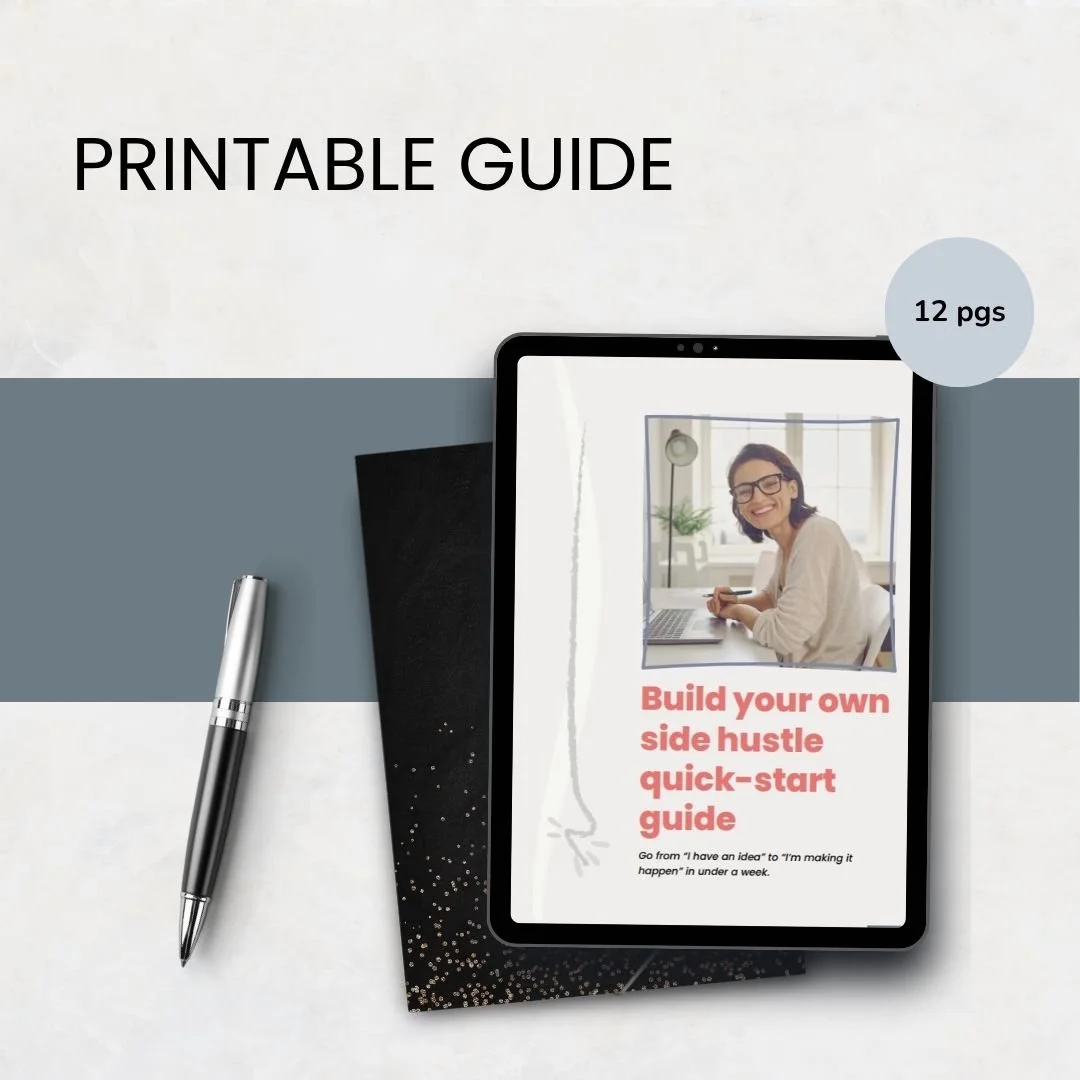
The Build Your Own Side Hustle Quick-Start Guide will help you take those first steps with confidence, so you can stop overthinking and start exploring what's possible.
This free guide will help you:
Turn a rough idea into a simple plan
Discover whether your idea is worth exploring
Take your first step without feeling overwhelmed
What is it?
The Build Your Own Side Hustle Quick-Start Guide is a free digital guide designed to help you move from "I've been thinking about it..." to "I'm actually getting started."
You'll work through practical exercises that help you explore your idea, think about the people you want to help, and identify realistic next steps. You don't need a business degree, a polished website, or the perfect idea to begin; you just need somewhere to start.
How this guide can help
Starting a side hustle doesn't have to mean quitting your job or investing thousands of dollars.
This guide can help you:
Gain confidence in your business idea before investing lots of time or money.
Discover your strengths and how they could become a side hustle.
Break a big dream into manageable first steps.
Stop waiting for the "perfect" time to begin.
Build momentum through small, intentional actions.
By the end, you'll have a clearer understanding of your idea and what to do next.
What's inside
Inside the guide, you'll:
Explore your interests, skills, and strengths.
Brainstorm side hustle ideas that fit your life.
Identify who you want to help.
Reflect on what makes your idea unique.
Create a simple action plan for your next steps.
It's designed to be practical, encouraging, and beginner-friendly.
Why I created it
One of the biggest myths about starting a side hustle is that you need everything figured out before you begin.
You don't.
I've worked with people who spent years waiting for the perfect idea, the perfect website, or the perfect moment. In reality, progress usually begins with one small action. I created this guide to help you take that first action with more clarity and less second-guessing.
Product details
Free digital PDF.
Interactive and printable.
Letter size (8.5 × 11").
Instant download.
Digital product only.
Ready to explore your idea?
Every successful side hustle started with someone deciding to give their idea a chance.
Download your free guide and take the first step today.
You don't have to avoid every mistake before you start. In fact, you probably won't.
Every side hustle owner has launched something that didn't sell, charged too little, overthought a decision, or wondered whether they were wasting their time. Those experiences aren't proof that you're failing. They're part of learning how to build a business.
The goal isn't to get everything right on your first try. It's to avoid the mistakes that keep you from trying at all. Start before you feel completely ready. Listen more than you assume. Keep things simple. Learn as you go.
A year from now, you won't be glad you spent another six months researching the perfect idea. You'll be glad you started, adjusted, and kept moving.
The business will change.
Your ideas will change.
Even your goals might change.
The important part is that you're becoming someone who's willing to test an idea instead of wondering about it forever.

Michelle Arseneault is a certified life coach and instructional designer who loves helping women understand why life feels harder than it needs to, and what to do about it.
“I believe small, thoughtful changes usually have a bigger impact than dramatic overhauls. Around here, you'll usually find me exploring the psychology behind everyday life, creating practical tools, or asking questions that help you see things from a new angle.”
You might also like…


Your first job doesn’t need to launch your perfect career. It can simply give you a place to start, learn what works for you, and make your next career choice with a little more information.