
Why the best trips aren't always the ones you planned perfectly
The best trips aren't always the ones where you see the most. They're the ones that give you something worth bringing home.
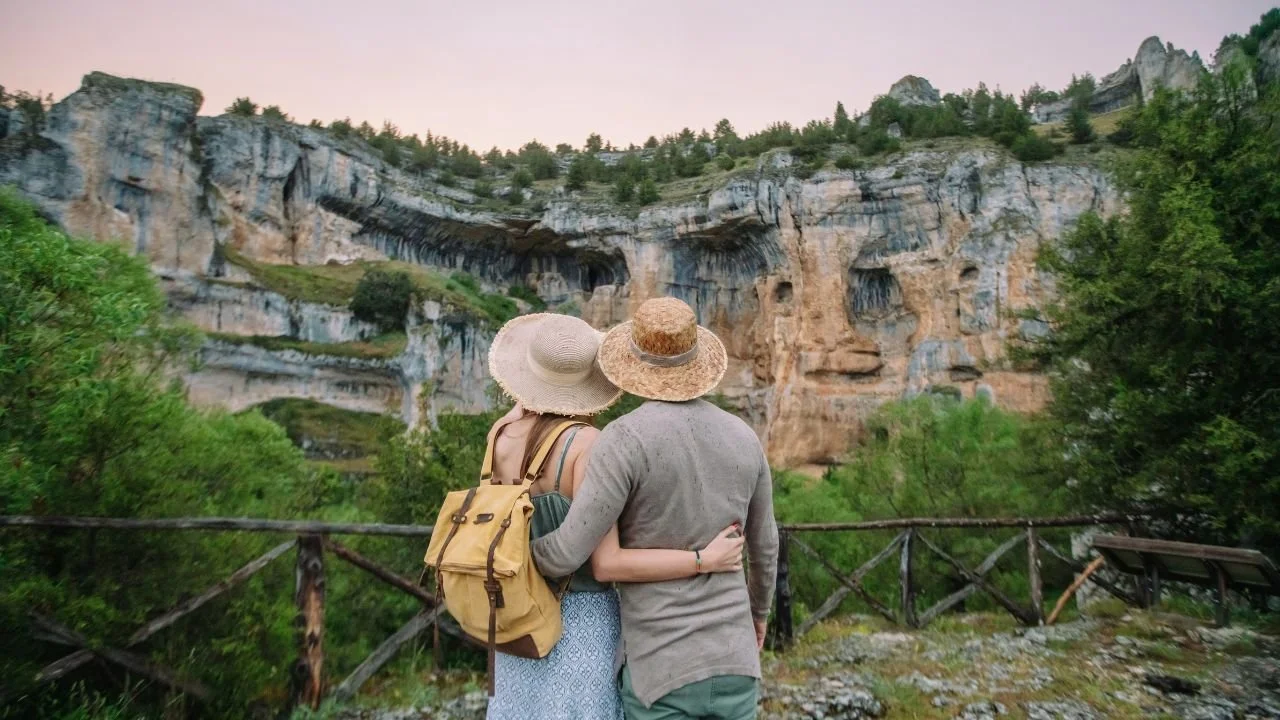
I could stare at that for hours. My hubby would rather stick toothpicks under his fingernails.
Years ago, I was travelling through northern Ontario when we stopped in a tiny town on a whim. I don't remember why we stopped, and honestly, I don't remember much else about that particular trip.
But I remember the souvenir shop.
It was one of those little places you wander into without expecting much, and inside I found an incredible statue carved from wood. It was called Butterfly Queen, and I loved it immediately. I don't remember exactly what she cost, but I do remember that I couldn't afford her.
So I left without her, and I've regretted it ever since.
It's funny what your brain decides to keep. I couldn't tell you what major attractions we visited on that trip or what carefully planned stops were on the itinerary, but decades later, I can still picture that statue in a tiny shop we hadn't even planned to visit.
That's one of the things I love most about travel. The experiences that stay with us aren't always the ones we travelled hundreds or thousands of kilometres to have. Sometimes they're the little restaurant we stumbled across, the person we talked to while waiting for a train, the neighbourhood we wandered into because we took a wrong turn, or the wooden statue we found in a souvenir shop we nearly walked past.
You can plan a wonderful trip down to the last detail, but you can't plan which moments will mean something to you.
Start with what you actually want from the trip
When we plan travel, it's incredibly easy to begin with what we're supposed to see.
Search for things to do in Paris, and you'll get a list. Search for a week in Tokyo, and you'll get another list. Before long, you've assembled an itinerary based almost entirely on what strangers on the internet have decided you shouldn't miss.
“The best trips aren’t always the ones where you see the most. They’re the ones that give you something worth bringing home.”
There's nothing wrong with seeing famous places. If you've dreamed of standing in front of the Eiffel Tower since you were twelve, please go stand in front of the Eiffel Tower. Take the photo. Buy the tiny Eiffel Tower keychain if it makes you happy.
But before you start filling your itinerary, ask yourself a different question: What do I actually want to experience on this trip?
Two people can visit exactly the same destination and want completely different things from it. Someone fascinated by history might happily spend hours wandering museums and historic sites. Someone else might want to understand what everyday life feels like there, while another person is mostly interested in food, art, architecture, nature, music, or adventure.
And sometimes what you need from a trip is simply rest. There is absolutely nothing morally superior about spending your vacation visiting museums if what you've been dreaming about for six months is sitting beside an ocean while nobody asks you to do anything.
Knowing what you want from a trip helps you choose experiences that matter to you instead of assembling somebody else's idea of the perfect vacation.

Stop collecting destinations
Travel has become strangely competitive.
We count countries. We make bucket lists. We post photos from famous places. Social media serves us an endless stream of beautiful destinations and loudly suggests that perhaps our lives would be considerably better if we were currently drinking something photogenic on the Amalfi Coast.
Before long, it's easy to start wanting trips because we're supposed to want them.
But a meaningful travel experience doesn't have to be exotic, expensive, or particularly impressive when you tell someone about it later.
Maybe you'd genuinely rather spend four days wandering bookstores and cafés in Montréal than two weeks racing around Europe. Maybe your dream vacation involves renting a cabin beside a lake and reading five novels. Maybe you've always wanted to visit Korea because you're fascinated by its history, food, music, or culture.
The destination matters far less than your connection to it.
Travel becomes more meaningful when you stop asking, "Where should I go?" and start asking, "What am I curious about?"
Leave enough room to actually experience where you are
I'm a planner. I understand the temptation to make sure you're getting the most out of a trip, especially when you've spent a lot of money and travelled a long way to get there.
The problem is that you can plan the life right out of a vacation.
If Tuesday requires you to be at a museum at 9:00, a cathedral at 10:30, lunch at noon, a tour at 1:15, a market at 3:00 and dinner at 5:30, congratulations; you've somehow managed to give yourself a commute while on vacation.
A good itinerary gives you enough structure to make sure the things that matter happen. A great itinerary also leaves enough space for things you couldn't possibly have planned.
Maybe you discover a neighbourhood you want to explore. Maybe lunch takes two hours because you're having a wonderful conversation. Maybe someone recommends a place you'd never heard of. Maybe you're tired and decide you'd rather sit in a park for an hour than visit another attraction.
Or maybe you drive through a tiny town in northern Ontario and decide to stop.
A meaningful trip needs enough structure to make things happen and enough breathing room to let things happen.
Experience the place instead of just seeing it
One of the easiest ways to come home feeling as though you've really experienced somewhere is to spend at least some of your time outside the tourism bubble.
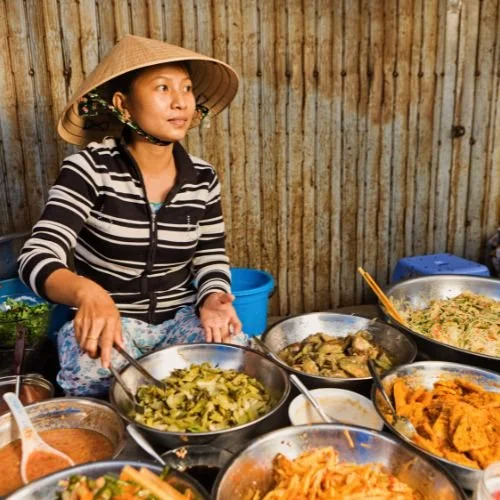
This is making me feel hungry! Yum!
That doesn't mean avoiding popular attractions. Famous places often became famous because they're genuinely worth seeing. It means allowing yourself to experience some of the ordinary parts of a destination too.
Take public transportation. Wander through a grocery store and look at what people actually buy. Sit in a park. Visit a local market. Eat somewhere that isn't located beside the biggest attraction in town. Learn how to say hello, please, and thank you in the local language.
Most importantly, be curious and respectful.
You're visiting someone else's home. You don't need to pretend you're a local or collect "authentic experiences" as though they're souvenirs. Pay attention to how people live, learn something about the culture you're visiting, and remember that you're a guest.
Sometimes the smallest observations are the ones that expand your understanding of the world.
Let the trip change something
One of my favourite things about travel is what happens after you come home.
A meaningful trip doesn't necessarily end when you unpack your suitcase.
Maybe you discovered a dish you now want to learn how to cook. Maybe visiting a historical site sparked an interest you keep reading about months later. Maybe you heard music you'd never encountered before, learned a few words of another language, or saw a way of living that made you question something about your own.
Sometimes the change is even simpler. You realize you like travelling slowly. You discover that you hate packed itineraries. You learn that you love travelling alone, or that you'd rather share the experience with someone. You come home appreciating something about your own life that you barely noticed before you left.
Those are souvenirs too.
In some ways, they're the best ones.
Before you go...
Before you start planning your next trip, forget about flights, hotels, must-see attractions, and top-ten lists for a moment. Ask yourself: What do I hope I'll experience there?
Maybe you want adventure. Maybe you want to learn. Maybe you want to eat everything you can get your hands on. Maybe you're fascinated by a culture you've been reading about for years. Maybe you desperately need to sit beside an ocean and hear nothing except waves for a few days.
Once you know what you're really travelling for, you can build a trip around the experiences that matter to you.
Just don't plan every minute.
I have no idea what happened to Butterfly Queen after I walked out of that little souvenir shop in northern Ontario. I like to think someone else saw her, fell in love with her, and had enough money in their wallet to take her home.
I still wish that person had been me.
But all these years later, she's also a reminder of something I've learned about travel: you can research the destination, make the reservations, choose the attractions, and build a fantastic itinerary, but some of your favourite memories will come from the things you never saw coming.
Leave some room in your trip for your own Butterfly Queen.

Michelle Arseneault is a certified life coach and instructional designer who loves helping women understand why life feels harder than it needs to, and what to do about it.
“I believe small, thoughtful changes usually have a bigger impact than dramatic overhauls. Around here, you'll usually find me exploring the psychology behind everyday life, creating practical tools, or asking questions that help you see things from a new angle.”
You might also like…

Vacations can quickly turn into another thing to accomplish. Before you fill every day with things to see and do, ask yourself what you actually want the trip to give you.