

It IS a cute vest, though.
When people hear the word volunteer, they often picture long shifts, rigid schedules, and an already-full calendar groaning under the weight. That mental image alone is enough to make even kind, generous people quickly back away, but volunteering doesn’t have to look like that.
At its core, this goal is about contributing in ways that fit your real life, not the version of yourself who has endless energy, zero responsibilities, and a color-coded planner (that person is mostly fictional).
Low-effort volunteering can look like:
Donating a specific item when you’re already decluttering
Making a small, recurring contribution instead of one big heroic push
Helping one person directly, quietly, and without fanfare
Choosing causes that align with your values and your capacity
One client described it as “doing good without burning myself out or resenting it later.” That’s the sweet spot.
This goal is not about doing more. It’s about doing what’s sustainable, so generosity becomes part of your life instead of another thing you avoid.
Jen’s story (with permission)
Jen reached out because she felt stuck in a quiet but persistent loop of guilt. She cared deeply about helping others and had always seen herself as someone who “gave back,” but her life no longer matched that image. Between full-time work, family responsibilities, and ongoing exhaustion, she wasn’t volunteering anywhere, and every reminder made her feel worse.
Her goal wasn’t to become a super-volunteer or add another commitment to her schedule. She wanted to stop feeling like she was failing at something that mattered to her. In her words, she wanted “to feel like a decent human again without running myself into the ground.”
What she had tried before was pushing herself. She’d signed up for things that required more time and energy than she had, then backed out or burned out. Each time, it reinforced the belief that she just wasn’t capable of contributing anymore.
Instead of asking how to do more, we shifted the question to how contribution could fit her actual life.
That’s when she realized she already baked regularly, loved organizing, and often showed up for people one-on-one. Together, we reframed what giving back could look like for her. She started by:
Adding one extra loaf when she baked and dropping it off to a neighbor going through a hard time
Setting up a small monthly donation; she didn’t have to remember or renegotiate
Choosing one low-commitment volunteer task connected to a cause she already cared about
She learned to just make choices that respected her very real limits.
Why this matters more than you think
For a lot of people, the desire to give back isn’t a whim; it’s tied to their identity.
It’s the part of you that wants to feel useful, connected, and like you’re contributing to something bigger than your to-do list. When that part goes unmet for too long, something subtle starts to happen.
People often describe it as:
Feeling oddly flat, even when life is “fine”
Carrying a low-level guilt they can’t quite explain
Feeling disconnected from who they used to be
Wondering when they became so inward-focused, even if that wasn’t intentional
Giving back, in a way that fits your life, is one of the fastest ways to rebuild self-respect and internal alignment with who you are as a person. Not because you’re earning moral points, but because your actions start matching your values again.
When that alignment is missing, people tend to overthink it. They tell themselves they’ll get back to volunteering “someday,” when they have more time or energy. In the meantime, the discomfort lingers.
What changes when contributing feels doable:
You stop seeing yourself as someone who “means well but never follows through”
You regain a sense of agency, even in small ways
You feel connected to others without overextending yourself
You build quiet confidence by keeping promises to yourself
This isn’t about being selfless. It’s about feeling like the kind of person you want to be, without sacrificing your well-being to get there.
For many people, low-effort, sustainable giving becomes a stabilizing force. It grounds them. It reminds them they still have something to offer, even in busy or exhausting seasons of life.
And that feeling, the one where you think, “Yes, this still matters to me, and I can actually live it,” tends to ripple out into other areas of their life. People show up differently at work, at home, and with themselves.
You might be thinking:
-
What this usually means
People often feel this way when their time and energy are already spoken for before the day even begins. Work, family, health, caregiving, and constant mental load leave very little left over.
When your life is built around keeping things running, volunteering starts to feel like one more demand instead of a choice.
When clients say this, it usually points to exhaustion rather than a lack of care. Many of them want to give back but don’t trust their energy anymore. They’ve pushed themselves too hard in the past, or they’re coming out of a season where everything required effort just to maintain.
This isn’t a motivation problem. It’s a capacity problem.
You don’t fix this by adding more. You fix it by choosing contributions that fit inside the life you actually have.
What helps you move past it
Instead of asking, “What could I add?” the better question is, “What could I gently layer into what I’m already doing?”
Giving back doesn’t need its own time slot to matter.
Quick win: Pair contribution with an existing habit
Choose one small act of generosity that fits into something you already do. For example, donating items while decluttering, adding one extra item when shopping, or sending a supportive message while already on your phone.
Why this works
Your brain doesn’t register this as extra work. It feels manageable, which lowers resistance and makes it easier to follow through.
Tools that might help
Book: *The War for Kindness: Building Empathy in a Fractured World by Jamil Zaki
A research-heavy but readable book about how empathy works, and how small, intentional acts can create real change; useful if your “why” is rooted in wanting to be more connected and compassionate.
-
What this usually means
This thought often comes from past experiences where you said yes with good intentions, then realized later that you didn’t have the energy, time, or emotional space to follow through.
Over time, that creates anxiety around committing to anything at all. Even small offers of help start to feel risky.
When clients express this fear, it usually points to a strong sense of responsibility and a desire not to disappoint others. Ironically, that same sense of responsibility can keep them stuck doing nothing.
Avoiding commitment feels safer than risking failure.
You don’t fix this by forcing yourself to be braver. You fix it by choosing forms of giving that don’t rely on ongoing promises.
What helps you move past it
Start with contributions that are clearly bounded. One-time actions, anonymous giving, or support that doesn’t depend on your continued availability.
Quick win: Choose a one-time or low-dependence action
Look for opportunities that don’t require follow-up, scheduling, or explanation. Something you can do once and be done.
Why this works
Clear limits protect your nervous system. When the end point is defined, your brain feels safe enough to engage.
Tools that might help
Book: *Helping: How to Offer, Give, and Receive Help by Edgar H. Schein
A deeper, more academic dive into the dynamics of helping relationships. This one’s for folks who want to think critically about how to help in a way that’s respectful and effective.
-
What this usually means
Many people carry an unspoken belief that helping only counts if it’s visible, impressive, or impactful on a large scale.
When you’re comparing yourself to charities, organizations, or people who seem to do “more,” your own efforts can feel insignificant before you even start.
When clients say this, it often points to comparison rather than reality. They’re overlooking how meaningful small, direct acts can be, especially to the person on the receiving end.
This belief tends to keep people frozen, waiting for the “right” opportunity to make a difference.
You don’t fix this by doing more. You fix it by narrowing your focus.
What helps you move past it
Shift your attention from impact at scale to impact on one person, one moment, or one need.
Quick win: Help one person directly
Choose a single, tangible act that helps one person or one situation. No audience. No measuring. Just follow-through.
Why this works
Small, completed actions rebuild your sense of effectiveness. Your brain learns that your effort does matter, which makes future giving feel worthwhile.
Tools that might help
Book: *The Art of Possibility by Rosamund Stone Zander & Benjamin Zander
A perspective-shifting book that helps you rethink contribution, leadership, and service, not in a preachy way, but in a deeply human way. Great for those wanting to lead or give with intention, even in small roles.
-
What this usually means
This usually shows up when people care about many things but don’t know how to choose. Every cause feels important, which makes starting feel overwhelming.
When everything matters, deciding feels heavy. People worry about choosing the wrong cause, doing it imperfectly, or committing in a way they can’t sustain.
When clients say this, it often points to a need for clarity, not motivation.
You don’t fix this by researching endlessly. You fix it by starting with what already resonates.
What helps you move past it
Begin with what you naturally care about, notice, or feel drawn toward. Your values already leave clues.
Quick win: Start with one value or irritation
Ask yourself, “What do I already notice or feel frustrated by?” That’s often a signal of where your contribution will feel most meaningful.
Why this works
Alignment reduces friction. When giving back connects to something you already care about, it feels less like effort and more like expression.
Tools that might help
Website: Idealist.org
Website: VolunteerMatch.org (U.S.-based but offers virtual opportunities)
Lets you filter opportunities by time commitment, location, and cause.Website: DoSomething.org (geared toward youth and younger adults, but inspiring for all ages)
Quick, creative volunteer projects that show how small actions can lead to impact.

Reflection exercise
Before you try to choose a challenge, a cause, or a tool, it helps to pause here. Most people skip this step. They jump straight to “What should I do?” without first looking at “What can I realistically support right now?” That’s usually how good intentions turn into guilt.
This reflection is meant to help you separate capacity from desire, and to stop judging yourself for limits that are simply part of being human.
Describe your current reality
Start by getting honest about what your life looks like right now, not what you wish it looked like.
Ask yourself:
How much time and energy do you realistically have in an average week?
What tends to drain you the most right now?
What has made volunteering or giving back feel heavy or unrealistic in the past?
For many people, this step brings up relief. Naming your limits doesn’t make you selfish; it makes you realistic.
Often, clients realize that what stopped them before wasn’t a lack of care, but a season of life that demanded more than usual. Work stress, caregiving, health issues, financial pressure, or long periods of emotional labour can quietly eat up capacity.
This is where you acknowledge that reality, instead of trying to power through it.
Describe your ideal
Now, shift your focus from your limits to aligning with what’s important to you.
Ask yourself:
What kind of contribution would feel good without draining you?
Would you rather help quietly, anonymously, or behind the scenes?
What would “enough” look like if you stopped comparing yourself to others?
This part isn’t about designing a perfect plan. It’s about noticing what feels light instead of heavy.
For some people, the ideal is something very small but consistent. For others, it’s occasional bursts of giving when energy allows. Neither is better. The goal is sustainability, not optics.
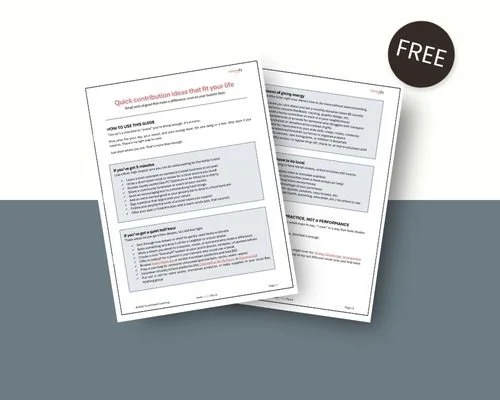
Get unstuck with the free Quick contribution ideas that fit your life guide
This free guide offers realistic, low-effort ways to contribute that work with your energy, schedule, and preferences.

Michelle Arseneault is a certified life coach and instructional designer who loves helping women understand why life feels harder than it needs to, and what to do about it.
“I believe small, thoughtful changes usually have a bigger impact than dramatic overhauls. Around here, you'll usually find me exploring the psychology behind everyday life, creating practical tools, or asking questions that help you see things from a new angle.”
You might also like…

You want to volunteer and give back, but you’re worried about overcommitting. Find small acts of service that fit into your real life but still feel meaningful.