
Stop living on autopilot and start choosing how you spend your days
This guide isn’t theory. It’s shaped by years of coaching sessions, real conversations, and the practical shifts that people tested until they found what actually works.

Living on autopilot means your days are mostly running on habit instead of choice.
You’re not actively deciding how to spend your time, energy, or attention.
You’re doing what comes next, what’s expected, or what you’ve always done, without stopping to check whether it still makes sense for you.
It usually starts as a coping strategy. You create routines to get through busy seasons. You fall into patterns that help you function. Over time, those patterns stop being temporary and quietly become permanent.
Things get done. Life moves forward.
Eventually, though, you notice that your days feel flat or disconnected. You’re busy, but not satisfied. Tired, but rest doesn’t fully help. Weeks pass and blur together, and you can’t remember the last time you intentionally chose how your day would go.
Living on autopilot doesn’t mean you’re lazy or doing something wrong. It means your life is being shaped by momentum, habits, and expectations rather than conscious decisions.
What living on autopilot looks like
Here are some common examples:
You wake up and immediately check your phone, not because you want to, but because that’s how mornings happen now.
You say yes to plans, requests, or extra work without pausing first to think about it, then feel annoyed or overwhelmed later.
You work until you’re exhausted because stopping feels uncomfortable, even when no one is asking you to keep going.
Your evenings disappear into doomscrolling, doing chores, or distracting yourself, and you’re not sure how you actually wanted to spend that time.
You keep routines or commitments that once made sense, even though they don’t really fit your life anymore.
When someone asks how you’re doing, you say “I’m really busy,” but you can’t explain what’s actually taking all your energy.
None of these examples is a problem on its own. That’s why living on autopilot is so easy to miss. It’s quiet. It looks like responsibility. It looks like normal life.
The issue isn’t that your life is full. It’s that you’re no longer choosing what fills it.
That’s what living on autopilot really means.
What intentional living looks like
Intentional living means you start choosing how you spend your days instead of just moving through them. It doesn’t mean every choice you make is thoughtful or ideal. It means you pause long enough to notice that a choice exists, and sometimes you take it.
In daily life, intentional living shows up in small, ordinary ways:
It looks like noticing you’re tired before you agree to something, instead of realizing it afterward.
It looks like deciding when your workday ends, even if there’s work waiting for you.
It looks like choosing one thing to care about today, rather than trying to do everything on your ‘to-do’ list.
It looks like questioning a habit that no longer fits your life, instead of assuming it’s permanent.
Living intentionally doesn’t remove responsibilities or life pressures, but it changes how you respond to them.
You still have obligations. You still have busy seasons. The difference is that your time and energy are being spent on purpose instead of by default.
Imagine how your days might feel if:
You don’t automatically answer messages the moment they come in. Instead, you decide when you’ll respond.
You notice when a routine is draining you and adjust it slightly instead of pushing through and hoping it gets better.
You check in with yourself before saying yes, even if the answer ends up being yes anyway.
You plan your evenings with some thought, instead of waiting to see what’s left after everything else is done.
You let go of a commitment that no longer feels right, even though it once did.
Intentional living isn’t about doing more. Most of the time, it leads to doing less, but with more purpose and thoughtfulness. You stop feeling like life is happening to you and start feeling like you’re participating in it again.
That’s what intentional living actually looks like.
Candice’s story (With permission)
Candice came to coaching feeling overwhelmed and worn down. She was juggling a demanding job and a lot of responsibility toward her family. On the surface, she was doing everything “right.” She showed up. She helped when asked. She tried to be dependable.
Inside, she felt stretched thin and unhappy.
What kept coming up in our conversations was guilt. Candice felt responsible for other people’s comfort and expectations. Saying no felt selfish. Taking time for herself felt unjustified. So she kept agreeing, even when she didn’t have the energy.
Over time, her days stopped feeling like hers. Almost all of her time went to work or to meeting other people’s needs. The things she enjoyed kept getting pushed to “later,” which never actually arrived.
We didn’t start by telling her to say no to everything or by cutting commitments overnight. That would have made the guilt worse. Instead, we worked on helping her slow down her decision-making.
Candice practiced pausing before responding to requests. She learned to ask herself one simple question: “Is this something I actually have the capacity for right now?”
At first, her choices didn’t change much. But her awareness did. She started noticing how often she agreed out of habit rather than intention. Gradually, she began making different choices in small ways. She declined a few requests. She protected short pockets of time for herself. She stopped apologizing for needing rest.
Her life didn’t instantly change. Her responsibilities were still there. But her days felt lighter. She felt more present. And for the first time in a long while, she was spending some of her time on things that mattered to her, not just everyone else.
That shift, learning to choose instead of automatically saying yes, was the beginning of living more intentionally for Candice.
Why living intentionally matters
Living on autopilot gives you the sense that life is happening to you instead of with you.
When you don’t intentionally choose how your time and energy are spent, they get spent anyway, often on things that no longer align with what you value or need.
You might be thinking:
-
What this usually means
People often feel this way when most of their time and energy are spent responding to other people’s needs or managing constant responsibilities. When your days are built around reacting to work demands, family obligations, messages, schedules, or pressure, it becomes hard to see where your own choices fit.
Over time, it stops feeling like you’re choosing anything at all. You’re just keeping things going.
When my clients say, “I don’t have control,” it usually points to a few common patterns: too many obligations with no breathing room, automatic yes habits, long stretches of putting themselves last, or routines that formed during stressful seasons and never got reset.
This isn’t a personal failure. It’s what happens when survival strategies become permanent.
You don’t fix this by making huge changes or blowing up your schedule. You fix it by giving yourself small, consistent opportunities to make choices again.
What helps you move past it
Regaining a sense of control starts with one simple action: make one decision on purpose.
It doesn’t need to be important. It doesn’t need to change your life. It just needs to come from you.
Choosing deliberately interrupts the constant state of reacting. It reminds your nervous system that you have influence over your day, even when your life feels full and demanding.
Quick win:
Make one intentional decision today. Choose something small that belongs to you. This might be deciding what you eat for lunch instead of defaulting to whatever’s fastest. It could be taking a short walk, pausing for five minutes before the next task, choosing which task you start with, or saying “not right now” to something that can wait.
The point isn’t what you choose. The point is that you choose it.
Why this works
Your brain needs evidence that you can make decisions without everything falling apart.
One intentional choice creates that evidence. It rebuilds trust in your ability to choose and makes the next decision feel safer and easier.
This is how agency returns, one small decision at a time.
Tools that might help
Read: Your ability to make decisions is key to intentional living
Book: *Essentialism by Greg McKeown
This book explores how to reduce unnecessary commitments, set clearer priorities, and create more space in your days without guilt.
-
What this usually means
People often think this when they’ve been in a demanding season for a long time. What started as a temporary adjustment, working longer hours, taking on extra responsibility, staying constantly available, slowly became the way life operates.
At first, these changes help. They allow you to cope, keep up, and get through what needs to be done.
The problem is that many coping strategies are never revisited. They stay in place long after the season that required them has passed. Over time, “This is just how things are” becomes a story that prevents you from questioning habits that no longer fit.
When clients say this, it usually points to routines built for survival rather than sustainability.
What helps you move past it
The first step is separating what is truly required from what has simply become familiar. Not everything that feels necessary actually is. Some things just haven’t been questioned in a long time.
Quick win:
Identify one inherited rule. Pick one part of your day that feels especially rushed or draining and ask yourself:
“What rule am I following here that I never consciously chose?”You’re not changing it yet. You’re just identifying it.
Why this works
Autopilot is powered by invisible rules. Once a rule becomes visible, it becomes optional. You don’t need to remove the habit to regain control. You just need to see it clearly.
Tools that might help
Book: *Four Thousand Weeks by Oliver Burkeman
This book challenges the idea that life will eventually slow down and offers a grounded way to make choices inside the time you actually have.
-
What this usually means
People often lose touch with what they want after long periods of prioritizing responsibility, productivity, or other people’s needs. Wanting becomes optional, inconvenient, or unsafe, so it slowly fades into the background.
This doesn’t mean you’re indecisive or disconnected from yourself. It means you’ve been practiced at putting yourself last.
When clients say this, it usually points to a long stretch of life where preference wasn’t allowed to guide decisions.
What helps you move past it
You rebuild your sense of self gently. ‘Wanting’ returns when it’s safe to notice your feelings again.
Quick win:
Learn to take notice of how things feel. Once a day, finish this sentence honestly:
“Today would’ve felt better if…”Don’t correct it. Don’t explain it. Just notice what comes up.
Why this works
This practice restores your ability to notice your preferences without pressure to make a choice in the moment, which is how real desire comes back online.
*Heads-up: Some of the links on this page are affiliate links, which means I may earn a small commission if you choose to make a purchase, at no extra cost to you. I only recommend tools and resources I genuinely believe are helpful. Thank you for supporting the work I do here.
Where to start

Reflection exercise
Before you try to change anything, it’s important to understand what’s actually happening in your day-to-day life. Most people skip this step and jump straight to fixing, which usually leads them right back to autopilot.
This part is about seeing clearly, not judging yourself.
Describe your current reality
Start with how your days actually feel, not how they look on paper.
Think through a typical weekday. Notice where your energy goes, what pulls at your attention, and what you spend most of your time responding to.
Ask yourself things like:
When do I feel rushed or pressured during the day?
What parts of my day feel automatic, like I’m just moving from one thing to the next?
Where do I feel most drained, even if nothing “bad” is happening?
What do I keep pushing through because it feels necessary or expected?
Be honest here. This isn’t a performance review. It’s a snapshot of your real experience.
Describe your ideal
Now shift to what you want your days to feel like, not your entire life.
This isn’t about designing a perfect routine or imagining a life without responsibilities. It’s about small, realistic differences.
Ask yourself:
What would feel calmer or less rushed?
Where would I want a bit more space or breathing room?
What would I like to have more say over during my day?
What would help my days feel more like mine?
Focus on how you want to move through your day, not on changing everything in it.
Why this matters
The difference between these two descriptions shows you exactly where autopilot is operating.
That gap points to the places where habits, expectations, or old coping strategies are running the show without your input. It also shows you where intention would make the biggest difference.
You don’t need to fix the whole gap. You only need to choose one place to step back in.
That’s where intentional living begins, not with a big plan, but with one clear place where you decide to stop running on default and start choosing again.
Do you want support with this?
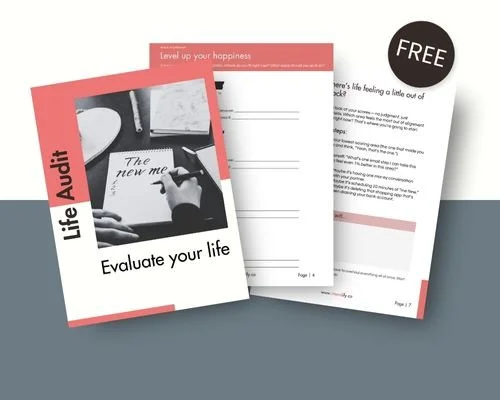
Start here: Get clarity with the free life audit
When this is right for you: You know something feels off, but you can’t quite name what it is. Everything looks fine on paper, yet you still feel unsettled, tired, or unsure what needs to change first.
How this can help: The Life Audit helps you zoom out and see the bigger picture of your life, one area at a time. It turns vague feelings into clearer insights so you can stop guessing and start making intentional choices. (Clarity alone can feel like a weight lifting.)

Follow a guided plan with the Design Your Dream Life Workbook
When this is right for you: You’re done circling the same thoughts in your head and want a clear, structured way forward. You like having prompts, examples, and a plan you can work through at your own pace.
How this can help: The workbook walks you through reflection, decision-making, and planning in a way that feels grounded and doable. Instead of wondering what to focus on next, you’re guided step by step, with space to think, write, and make choices that actually stick.

Get personal support with one-on-one coaching
When this is right for you: You know you want something different from your life, but you feel stuck, scattered, or unsure where to focus first. You’ve tried reflecting on your own, maybe even started a plan, but you keep circling the same questions. You want clarity, momentum, and a real conversation with someone who can help you see what you’re missing (and gently call out what’s holding you back).
How this can help: In one-on-one coaching, we slow things down and sort through your real life, not an idealized version of it. We’ll clarify what “your dream life” actually means for you right now, identify what needs to change, and map out next steps that feel doable instead of overwhelming. You’ll leave each session with clearer priorities, practical actions, and a sense of direction you can trust.
FAQ - Questions my clients ask
-
Living on autopilot isn’t automatically a problem. It becomes one when your days no longer feel like they belong to you.
Most people use autopilot to get through busy or demanding seasons. That’s normal and often necessary. The issue shows up when those patterns never get revisited. You keep reacting, pushing, and saying yes long after the original pressure has passed.
If your days feel flat, draining, or disconnected, even when things are technically “fine,” that’s usually a sign autopilot has taken over for too long. You’re not overthinking. You’re noticing something real.
-
No. And trying to usually backfires.
Autopilot doesn’t get dismantled through big, dramatic changes. It loosens when you start making small, intentional choices consistently. That might mean deciding how your day starts, choosing when work ends, or protecting a small pocket of time that belongs to you.
The goal isn’t to overhaul your life. It’s to step back into it gradually, without creating more stress or guilt.
-
Most people’s responsibilities are real. Work still needs to get done. Family still needs care. Bills still need to be paid.
Intentional living doesn’t require removing responsibilities. It focuses on how you relate to them. Even inside non-negotiable obligations, there are usually small choices around timing, pacing, boundaries, or recovery.
Clients are often surprised to realize they don’t need full freedom to feel better. They need one place where they get to decide something on purpose.
-
Because autopilot is comfortable, even when it’s draining.
Your brain likes familiarity. It likes efficiency. It likes patterns that don’t require extra thought. Interrupting autopilot creates friction, and friction can feel uncomfortable or even unsafe at first.
That discomfort doesn’t mean you’re doing something wrong. It means you’re changing a pattern that’s been running quietly for a long time.
This is why intentional living works best when it’s practiced gently, not forced.
-
That’s more common than not.
Many people lose touch with what they want after years of prioritizing responsibility, productivity, or other people’s needs. Wanting wasn’t encouraged, so it went quiet.
You don’t need clarity to start living intentionally. You need curiosity. Paying attention to what drains you, what supports you, and what feels slightly better is enough. Wanting comes back through noticing, not pressure.
-
Clients usually notice it in subtle ways. They feel less resentful. Decisions feel lighter. They catch themselves before automatically saying yes. Their days feel calmer, even when they’re still full.
If you’re noticing your patterns sooner or pausing before reacting, that’s progress. Intentional living isn’t something you complete. It’s something you return to.
-
You will. That’s normal.
Autopilot patterns don’t disappear. They loosen over time as you practice choosing differently. Falling back into old habits isn’t failure. It’s information. It shows you where support, structure, or compassion is still needed.
The goal isn’t to never use autopilot again. It’s to notice when it’s running and decide whether you want to stay there.
You might also like…


Many people reach a point where life looks fine on the outside but feels off on the inside. This post helps you slow down, notice what isn’t working, and explore what a dream life could mean for you today, without pressure or having to make big decisions.