
Design and build your dream life, or just decide to be happy
This page is designed to help you notice where you have more choice in how you live than you might realize.
This isn’t based on theory. It’s shaped by years of coaching sessions, real conversations, and the practical shifts that people tested until they found what actually works.

Most people don’t sit down one day and decide, “I’m going to design my dream life.”
Designing your dream life can feel like a big idea, especially if you’re tired, stretched thin, or unsure where to begin.
This guide is designed to take the pressure off. We’ll look at what designing your dream life actually means, why it matters, and simple steps you can take to move toward a life that feels more like one you chose.
All you need is a willingness to look at where you are now and what’s calling for your attention.
What it means to live your dream life
Designing your dream life is the process of shaping your days, routines, habits, and choices so they reflect what matters to you instead of what’s expected of you.
It’s not about:
quitting everything
starting over
reaching some picture-perfect ideal
Beginners need to hear this clearly: Your dream life is simply a life that feels like it fits you.
That’s it.
Examples of what this looks like in real life
A dream life might mean:
having energy at the end of the day
feeling respected in your relationships
spending time on things that make you happy
having a job or schedule that doesn’t drain you and even inspires you
making decisions with confidence
reducing the constant pressure to be everything to everyone
Sometimes the “dream life” is about adding something new. Sometimes it’s about removing something heavy. And sometimes it’s about giving yourself permission to want more.
When you look at it this way, designing your life isn’t a big, dramatic overhaul. It’s a steady shift toward choices that match the kind of person you want to be and the kind of life you want to live.
It can help to see how this plays out in someone else’s life. Here’s a real example of what happens when a person realizes they’ve been carrying the weight of everyone else’s expectations and finally decides to make decisions that support the life they want.
Shelly’s story (With permission)
Shelly was one of those people everyone admired. From the outside, her life looked organized, reliable, and steady. But inside, she felt like she was disappearing into the background of her own life.
Most of her days were spent taking care of everyone else’s needs. She managed the schedules, the appointments, the rides, the reminders, and the emotional labour. If something slipped through the cracks, she caught it. If someone needed something, she handled it. And because she was so capable, no one noticed how much she was carrying.
One day, she told me, “I just want to feel like I matter in my own life.” That was the first time she had said it out loud.
When we reviewed her week together, it became painfully obvious: she was supporting everyone around her, but she wasn’t making space for herself anywhere. Not even a little. Every hour belonged to someone else.
She began to notice patterns, like how she:
automatically said yes, even when she meant no
felt completely drained at the end of every day
spent most days feeling a building resentment and frustration for her family and coworkers
can’t remember the last time she did something simply because she wanted to
We worked together to choose one simple shift: a 20-minute block of time each evening that was hers alone. No chores. No multitasking. No being “on call.” Just a small, protected space where she wasn’t responsible for anyone else.
I had to show her that wanting to live more for herself didn’t mean she was selfish; it meant she was finally being honest with herself and everyone in her life. Once she was honest about her feelings, she could make choices that helped her instead of draining her.
Her turning point didn’t come from a big revelation. It came from noticing what didn’t feel right anymore and taking small steps toward the life she actually wanted. That’s where your own process begins, too.
Why you should design your dream life
If you don’t take time to shape your life on purpose, it will naturally shape itself around:
other people’s needs
old habits
stress
routine
whatever is most urgent, 20 times each day
That’s how people end up living a life they didn’t choose.
When you take time to design your life intentionally, you’ll:
feel clearer about what you want
make decisions more confidently
stop repeating patterns that keep you stuck
finally create space for things that matter to you
feel more grounded and less overwhelmed
build a lifestyle that supports your well-being instead of draining it
You might be thinking:
-
What this usually means
People often feel this way when most of their time and energy are used responding to other people’s needs or managing constant responsibilities. When every day is built around reacting to work, family, messages, schedules, or pressure, it becomes hard to see where your own choices fit.
Over time, it stops feeling like you’re choosing anything at all. You’re just keeping things going.
When my clients say, “I don’t have control,” it usually points to too many obligations and not enough breathing room, automatic yes patterns, long periods of putting themselves last, or habits that developed during stressful seasons and never got reset.
You don’t fix this by making huge changes. You fix it by giving yourself small and consistent opportunities to make choices again.
What helps you move past it
Regaining a sense of control starts with one simple action. Make one decision on purpose. It doesn’t need to be big or important. It just needs to come from you.
This breaks the cycle of reacting and helps you remember that you can have influence over your day, even when your life feels full.
Quick win: Make one intentional decision today
Choose something small that belongs to you. This could be what you eat for lunch, a short walk, a five minute pause, which task you do first, or saying “not right now” to something that can wait.
Why this works
Your brain needs evidence that you can make decisions without everything falling apart. One intentional choice creates that evidence and makes the next decision easier.
Tools that might help
Read: Your ability to make decisions is key to intentional living
Book: *Essentialism by Greg McKeown
This book teaches how to lower commitments, set clearer priorities, and create more space in your day.
-
What this usually means
This thought shows up when everything feels important at the same time. You might want more energy, better routines, stronger boundaries, a calmer home, or more time for yourself. When you try to look at all of it at once, your mind shuts down.
This doesn’t mean you’re unmotivated. It usually means you’ve been overwhelmed for a long time and your brain can’t sort priorities when everything feels equally urgent or equally unclear.
My clients often think they need a perfect plan before they start. You don’t. You only need a starting point.
What helps you move past it
The simplest way forward is choosing one life area to focus on for now. It doesn’t need to be the right one or the most important one. Choose the one that feels the most uncomfortable, neglected, or distracting when you think about it.
Once you narrow your focus, your next step becomes easier to see.
Quick win: Pick one life area to focus on this week
Look at the 12 life areas and notice which one stands out. Often the right one is the area you keep thinking about or avoiding. Choose one small action in that area to try this week. You’re not building a full plan. You’re gathering information.
Why this works
Choosing one area reduces overwhelm. Choosing one action creates movement. You get clarity from doing, not from trying to solve everything in your head.
Tools that might help
Life Audit, to give you a simple view of each life area so you can find your starting point
Book: *Atomic Habits by James Clear
It explains how to begin with small actions when you feel stuck and how those actions create momentum, especially when you are unsure where to begin.
-
What this usually means
This thought shows up when you feel a pull toward something more, but you’re afraid wanting more makes you ungrateful or selfish. Many people grew up with messages like, “Be thankful, other people have it worse,” or “You already have a good life, why would you want anything different?” Over time, those messages get baked in, and you start second-guessing your own needs.
Feeling grateful and wanting change can exist at the same time. You’re not doing something wrong by noticing areas of your life that feel empty, stressful, or misaligned. Gratitude doesn’t cancel out the parts of your life that need attention. It only means you appreciate what’s going well.
The real issue here isn’t gratitude.
It’s the belief that you’re not allowed to want more.What helps you move past it
The first step is separating two things that often get tangled together:
What you appreciate
What isn’t working for you
When you see these clearly, you can make decisions based on your actual needs instead of guilt or old expectations.
You don’t have to abandon gratitude. You just have to stop using it as a reason to stay stuck.
Quick win: Write two simple lists
Create one list called “What I appreciate” and another called “What I want.” Don’t overthink it. Keep it honest. You’re just gathering information.
Why this works
Seeing both lists on paper helps you understand your life more accurately. It gives you permission to hold gratitude without ignoring things that need to change.
Tools that might help
Core Values Toolkit, to help you understand what you actually need more of
Book: *The Gifts of Imperfection by Brené Brown
It explains how shame and ‘good person’ expectations shape your decisions and why you might minimize your own needs or feel guilty for wanting change.
-
What this usually means
This thought often comes from years of being guided, nudged, or expected to follow a certain path. Maybe your family encouraged a specific career, lifestyle, role, or personality. Maybe they rely on you in ways that leave little room for your own preferences. Or maybe they simply have strong opinions about what your life should look like.
Over time, it’s easy to lose track of what you want because you’ve been focused on what keeps the peace. You might even feel guilty for wanting something different, or worried that choosing your own direction will disappoint someone.
This doesn’t mean your family is wrong or trying to be harmful. It just means their expectations have taken up so much space that you haven’t had a chance to hear your own voice clearly.
What helps you move past it
You don’t need to make a dramatic announcement or confront anyone. The first step is separating their expectations from your preferences. You can’t make aligned choices until you know which thoughts belong to you.
Once you know what you want, it becomes easier to set gentle boundaries and make decisions that support your life, not just the life others imagined for you.
Quick win: Compare “their picture” and “your picture”
Write two short lists:
What my family wants for me
What I want for myself
Be honest, even if the items in the lists make you feel uncomfortable.
Why this works
Seeing the two lists side by side helps you understand where the pressure is coming from and what you actually want. This clarity makes boundary-setting and decision-making easier.
Tools that might help
Book: *Adult Children of Emotionally Immature Parents by Lindsay C. Gibson
It explains how family expectations can shape your identity and decision-making, even in adulthood, and why you might feel pressure to follow a certain path instead of your own.
*Heads-up: Some of the links on this page are affiliate links, which means I may earn a small commission if you choose to make a purchase, at no extra cost to you. I only recommend tools and resources I genuinely believe are helpful. Thank you for supporting the work I do here.
Where to start

Reflection exercise
Before you make changes, it helps to get clear on where you are and where you want to go. These two short journal prompts will help you notice the gap between your current reality and the life you want to build. Don’t overthink it. A few honest sentences are enough.
Describe your current reality
What’s your life like right now? Consider how your days feel, what drains you, what supports you, and what keeps showing up as a pattern. Be honest, even if it makes you feel guilty.
Helpful cues:
What feels heavy or frustrating in your life right now?
What feels fine but not fulfilling?
What do you keep putting off because you’re too tired, too busy, or unsure where to begin?
Describe your ideal
If these parts of your life improved, what would it look and feel like? Picture a perfect day. Focus on changes that feel real and meaningful.
Helpful cues:
What would feel easier?
What would you have more energy or time for?
What boundaries, habits, or routines would help you?
What would you love to experience more often?
Why this matters
Naming what’s real and what you want helps you see where change is possible. When you’re clear on the gap between the two, it becomes easier to decide what to do next.
Do you want support with this?
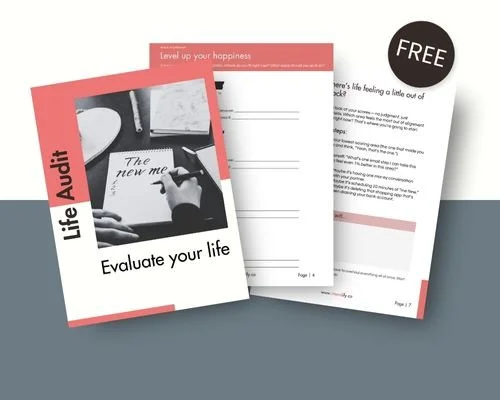
Start here: Get clarity with the free life audit
When this is right for you: You know something feels off, but you can’t quite name what it is. Everything looks fine on paper, yet you still feel unsettled, tired, or unsure what needs to change first.
How this can help: The Life Audit helps you zoom out and see the bigger picture of your life, one area at a time. It turns vague feelings into clearer insights so you can stop guessing and start making intentional choices. (Clarity alone can feel like a weight lifting.)

Follow a guided plan with the Design Your Dream Life Workbook
When this is right for you: You’re done circling the same thoughts in your head and want a clear, structured way forward. You like having prompts, examples, and a plan you can work through at your own pace.
How this can help: The workbook walks you through reflection, decision-making, and planning in a way that feels grounded and doable. Instead of wondering what to focus on next, you’re guided step by step, with space to think, write, and make choices that actually stick.

Get personal support with one-on-one coaching
When this is right for you: You know you want something different from your life, but you feel stuck, scattered, or unsure where to focus first. You want clarity, momentum, and a real conversation with someone who can help you see what you’re missing (and gently call out what’s holding you back).
How this can help: In one-on-one coaching, we slow things down and sort through your current life, then an idealized version of it. We’ll clarify what “your dream life” actually means for you right now, identify what needs to change, and map out next steps that feel doable instead of overwhelming. You’ll leave each session with clearer priorities, practical actions, and a sense of direction you can trust.
FAQ - Questions my clients ask
-
It means making choices on purpose instead of reacting to everything around you. You look at what’s working, what isn’t, and what you want more of. Then you take small steps toward the version of your life that feels right for you.
-
Start with one life area that feels the most neglected or frustrating. You don’t need to fix everything at once. Focusing on one area builds clarity and confidence, which makes future changes easier. Start with the free Life Audit.
-
Choose the one you think about the most or avoid the most. If you’re unsure, use the Life Audit to see where the gaps are. Most people know their starting point as soon as they look at the full list of life areas.
-
You’re not alone. Most people know what isn’t working long before they can picture what they want. The guide helps you name what feels off, explore what you want instead, and test small steps so your version of “ideal” becomes clearer over time.
-
Most people notice a shift within a week because they’re finally paying attention to their life in a focused way. Bigger changes come from small steps repeated over time. The goal isn’t speed. It’s alignment.
-
No. You can start small. Many people begin with wanting calmer mornings, more fun, or fewer obligations. Designing your life is about shaping the everyday moments, not aiming for a complete overhaul.
You might also like…


Many people reach a point where life looks fine on the outside but feels off on the inside. This post helps you slow down, notice what isn’t working, and explore what a dream life could mean for you today, without pressure or having to make big decisions.