
Travel with purpose, not just for pretty pictures
This guide is designed to help you move away from rushed, checklist-style travel and toward deeper experiences while you’re there.
This guide isn’t theory. It’s shaped by years of coaching sessions, real conversations, and the practical shifts that people tested until they found what actually works.
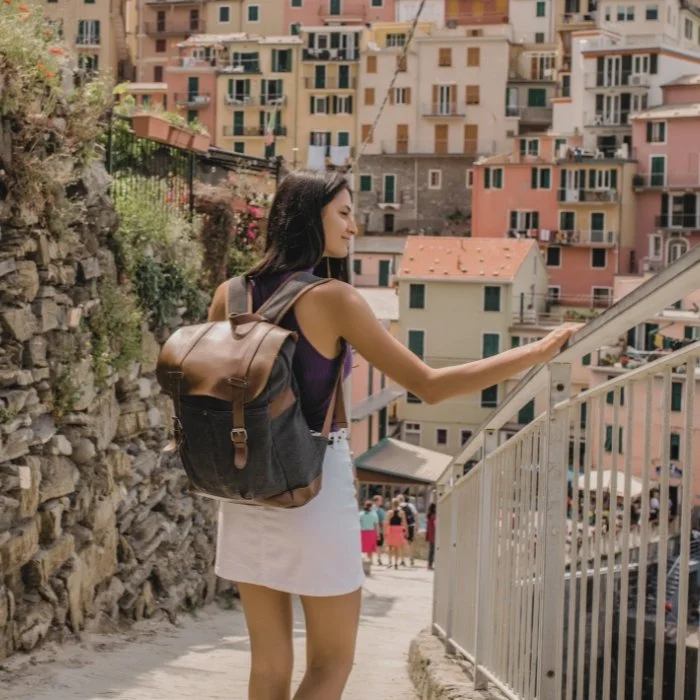
There’s nothing wrong with a beautiful photo. The problem starts when the photos are the best part of the trip.
Purposeful travel is the shift from collecting destinations to creating experiences that actually stay with you. It’s less about squeezing every landmark into a schedule and more about choosing moments that help you feel connected and curious while you’re there, and that don’t immediately fade once you’re home and unpacking (and questioning why you bought that souvenir mug).
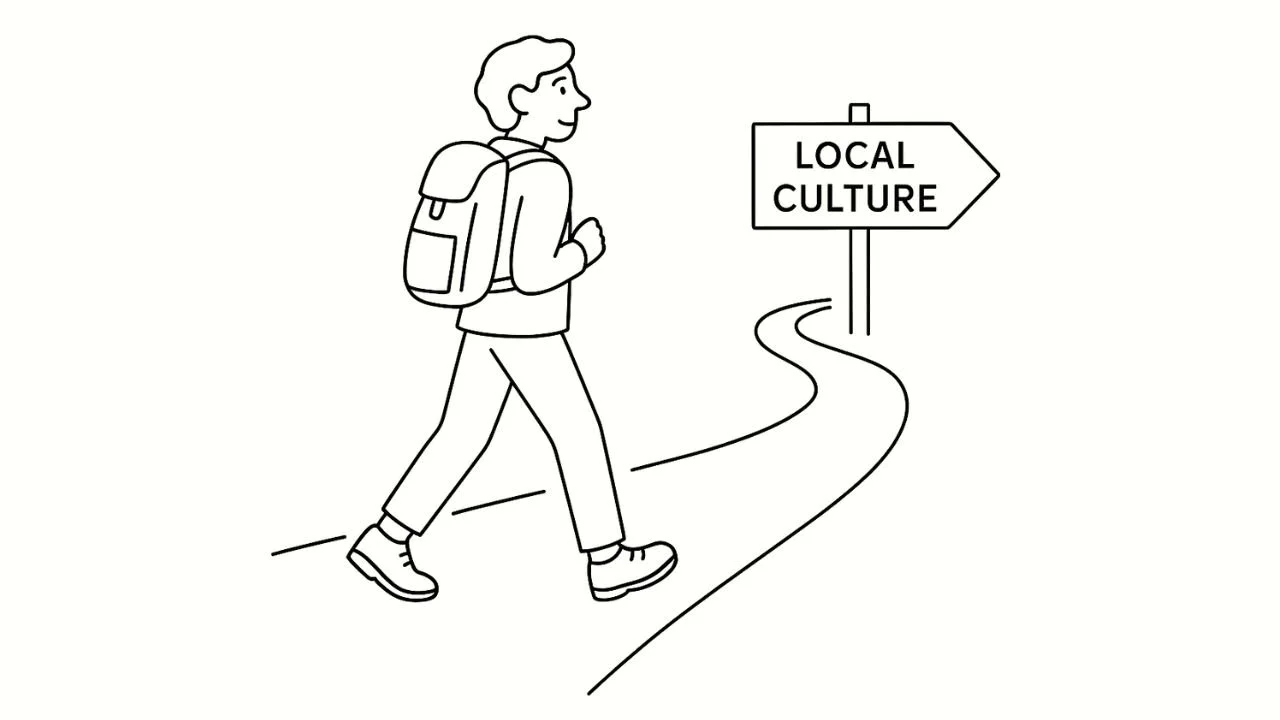
What it means to travel with purpose
Traveling with purpose means you’re intentional before you go and present while you’re there.
You’re asking yourself questions like:
What do I want to feel on this trip?
What kind of experience fits this season of my life?
How do I want to interact with the place, not just pass through it?
Purposeful travel doesn’t require expensive flights, luxury hotels, or long itineraries. It works just as well on a weekend getaway, a road trip, or even exploring closer to home.
What this looks like in real life
Choosing one neighborhood to explore slowly instead of rushing across the city
Planning around food, art, history, or nature because those things genuinely light you up
Talking with locals, joining a workshop, or attending a small event instead of sticking only to tourist highlights
Leaving space in your schedule so you’re not constantly thinking about what’s next, instead of being where you are.
The goal isn’t to do more. It’s to do what matters to you.
Janine’s story (with permission)
Janine came to me feeling disappointed after what should have been a “dream trip.” She’d gone somewhere beautiful, followed the popular itineraries, and returned home feeling oddly flat and underwhelmed. She wanted help planning her next trip to avoid repeating the same pattern of disappointment.
When we unpacked it, she realized she’d planned the trip based on what she thought travel should look like, not on what she actually enjoys. She loves learning, deep conversation, and quiet observation, but her days had been packed with long lines, crowded attractions, and constant movement.
So, for her next trip, she intentionally planned fewer activities and chose one clear focus: local culture. She booked a walking tour with a local historian, spent slow afternoons in small neighborhood cafés, and left her mornings unscheduled for wandering or reading.
She came home feeling energized, reflective, and already thinking about how to bring that slower, more intentional feeling into everyday life.
Same travel budget. A completely different experience.
Why you should travel with purpose

Share this guide on Pinterest.
Purposeful travel isn’t a travel upgrade. It’s a shift away from consuming places and toward actually experiencing them.
A lot of travel today is built around efficiency, so you can see everything. You move quickly, follow a checklist, and make sure you capture the moment so you can show that you were there. The focus becomes landmarks, highlights, and photos, often at the expense of what it feels like to be in a place.
Purposeful travel asks a different question.
Instead of “What do people come here to see?” you start asking, “How do I want to experience this place?”
When you travel this way, you’re not rushing from one stop to the next or thinking about what you need to see afterward. You spend more time in fewer places. You sit longer. You wander without an agenda. You notice how things work, not just how they look.
You end up having more conversations, eating meals without checking the time, and experiencing parts of a place that don’t show up on highlight lists. The focus shifts from capturing proof that you were there to actually being there.
That’s why purposeful travel matters. Instead of collecting photos of places you passed through, you spend your time actually experiencing the place you’re in.
You might be thinking:
-
When you start to feel that post-trip “meh,” it usually means you’ve fallen into default travel mode, doing what’s expected instead of what’s intentional. You might love exploring new places, but without a deeper why, it can feel hollow.
Here’s what often drives that feeling:
Too much focus on ‘seeing’ instead of ‘experiencing’. You’ve been everywhere and yet nowhere, moving so quickly there’s no time to absorb anything.
Overloaded itineraries. You squeeze every hour full of activities but forget to leave room for rest or surprise.
No emotional anchor. You plan logistics, but not purpose. The question “What do I want this trip to mean?” never makes it onto the checklist.
Comparison fatigue. When your travel becomes a performance for others, consciously or not, it stops being for you.
Purposeful travel doesn’t have to mean making life-changing pilgrimages or quitting your job to backpack for six months. It simply means aligning your trip with what you value most: curiosity, connection, simplicity, creativity, nature, culture, whatever it may be.
When you don’t travel intentionally, you experience new places through a filter of “shoulds.” You should see that monument, try that food, and pose in that spot. But “shoulds” rarely create fulfillment.
What this usually means
This often happens when trips are planned on autopilot. You’re following familiar patterns, popular itineraries, or expectations without checking whether they’re important to you.
What helps you move past it
Break the pattern on purpose. Change the focus of the trip, not necessarily the destination. When you choose a theme or intention, your decisions naturally shift.
Quick wins
Start every trip with one guiding question. Ask yourself: What do I want to take home from this trip that isn’t a souvenir? Write it down and let that question shape your plans.
Why this works: It gives meaning to every decision, from destination to dinner.
Schedule one “nothing” block per day. No tours, no must-sees, no phone. Just notice what catches your eye.
Why this works: Intentional stillness often reveals the most memorable parts of travel.
End each day with reflection. Ask: What surprised me today? What did I learn about this place or myself?
Why this works: It transforms passive observation into mindful connection.
Why this works
A clear intention reduces decision fatigue and makes it easier to plan a trip based on connecting to a new place and it’s people and history. Your brain starts searching for meaningful experiences instead of treating the trip like a checklist.
Tools that might help
Read: Stop daydreaming: 5 Steps to create meaningful travel experiences
Book: *The Art of Noticing by Rob Walker: A brilliant collection of 131 prompts to help you pay attention differently. Great for anyone trying to see the familiar with fresh eyes.
Book: *On Looking: A Walker’s Guide to the Art of Observation by Alexandra Horowitz: The author walks around her New York neighborhood with experts (a geologist, an artist, and a dog) and sees the world anew each time.
Book: *Wanderlust: A History of Walkingby Rebecca Solnit: A more literary take, this book explores walking as a way of thinking, seeing, and connecting with yourself and the world.
Podcast: The Thoughtful Travel Podcast (Amanda Kendle): Honest conversations about connection, cultural exchange, and traveling ethically.
Podcast: The Atlas Obscura Podcast: Short episodes highlighting hidden stories and places around the world. Perfect for sparking curiosity.
Podcast: Zero To Travel (Jason Moore): Mixes practical travel advice with deeper life lessons about purpose, freedom, and adventure.
Podcast: Women Who Travel (Condé Nast Traveler): Real, candid stories from travelers redefining what meaningful exploration looks like.
-
It’s easy to feel like an outsider when you travel because you’re surrounded by newness, and so your experiences stay on the surface. You meet people, but only briefly. You admire culture, but from a distance. The secret to purposeful travel isn’t doing more, it’s connecting deeper.
Here’s what can help to bridge that gap:
Ask ‘curiosity’ questions. Instead of “What’s this?” try “What’s the story behind this?”
Listen with presence. If you strike up a conversation, resist the urge to fill the silence. Let people share at their own pace.
Seek lived experience. Choose authentic activities (like community markets or local workshops) over big-ticket tourist attractions.
Reflect afterward. Ask yourself, “What perspective did this experience open for me?”
Seeking connection changes travel from “something you did” to “something that changed you.”
Read: Why your sense of wonder might be missing (and how to get it back)
What this usually means
You want more meaning, but you’re not sure how to create it.
What helps you move past it
Get curious about a place, it’s people, and it’s history. Think about why you want to visit.
Quick wins
Do one thing “with” locals, not “around” them. It could be a cooking class, a walking tour led by residents, or volunteering for a community clean-up.
Why this works: Shared activity creates a genuine connection faster than conversation alone.
Use the 3-word rule. Learn how to say hello, thank you, and please in the local language, and actually use them.
Why this works: Respect builds bridges. Even a small effort earns warmth.
Reflect on one value you saw lived differently. Maybe it’s community, hospitality, or pace of life. Ask yourself: “What could I borrow from that in my own life?”
Why this works: It helps your travel lessons come home with you.
Why this works
Curiosity shifts you out of “tourist mode” and into presence. People respond to genuine interest far more than polished itineraries.
Tools that might help
Book: *Vagabonding by Rolf Potts: A modern classic on traveling mindfully and embracing simplicity instead of status. It’s philosophical, not preachy.
Book: *The Art of Travel by Alain de Botton: A reflective, often funny look at why travel moves us (and sometimes doesn’t). Great for introspective readers.
Book: *Atlas of the Heart by Brené Brown: While not strictly about travel, it helps you understand emotions; a perfect companion when exploring new cultures and yourself at the same time.
Book: *Travel as a Political Act by Rick Steves: A thoughtful take on using travel to broaden your worldview and spark empathy.
-
Purposeful travel isn’t about luxury or long vacations. It’s about paying attention. You can travel intentionally for a weekend or even an afternoon if you bring the right mindset.
Here’s how:
Reframe what “travel” means. A road trip, a day trip, or exploring your own city counts.
Redefine what “value” means. Skip expensive attractions if they don’t align with your purpose.
Focus on meaning per minute, not money per mile. Depth beats distance every day.
When you wait for the “perfect trip,” you postpone joy and growth. Starting small keeps the muscle of curiosity alive. Travel doesn’t have to mean a big, expensive trip to far-off places; shifting your mindset to see travel as a collection of meaningful experiences can transform everyday moments into adventures. Whether it’s exploring a new neighborhood, trying a different cuisine, or taking a spontaneous day trip nearby, these smaller experiences offer rich opportunities for discovery and growth. By focusing on the joy of curiosity and presence rather than the destination, you open yourself up to intentional living and a more fulfilling sense of adventure wherever you are.
Read:
Travel on a budget: 10 Creative ways to explore without breaking the bank
Explore the world without feeling like you have to go broke doing it
What this usually means
There’s a belief that meaningful travel requires big trips, long stays, or significant spending. That belief quietly blocks creativity.
What helps you move past it
Purpose comes from intention, not distance. Short trips and small budgets can still be deeply meaningful when planned thoughtfully.
Quick wins
Plan a micro-adventure. Visit one new place within 100 km and approach it like it’s a foreign country. Notice what stands out.
Why this works: Curiosity doesn’t depend on distance; it depends on paying attention.
Create a “local bucket list.” Write down ten things in your area you’ve never tried. Commit to doing one this month.
Why this works: You’ll rediscover what’s right in front of you.
End every local trip with a reflection question. Ask yourself: “What changed for me today?”
Why this works: Reflection turns even short outings into growth moments.
Why this works
When time or money is limited, you’re more likely to choose experiences that actually matter to you.
Tools that might help
Book:*Blue Highways by William Least Heat-Moon: A beautiful narrative about finding meaning on the backroads of America. Perfect for the “travel slower, feel more” mindset.
*Heads-up: Some of the links on this page are affiliate links, which means I may earn a small commission if you choose to make a purchase, at no extra cost to you. I only recommend tools and resources I genuinely believe are helpful. Thank you for supporting the work I do here.
Where to start

Reflection exercise
Before you change how you travel, it helps to understand what’s actually happening now. Most people skip this step and jump straight to planning differently, then wonder why the next trip still doesn’t feel right.
This reflection isn’t about judging past trips or finding the “right” way to travel. It’s about noticing patterns, because noticing your patterns can be clues to explaining your past results.
Describe your current reality
Think about your last few trips, big or small.
How did they feel while you were there, not just afterward?
When did you feel most rushed, disconnected, or tired?
What took up most of your time and energy: moving between places, sticking to schedules, documenting everything, or trying not to miss out?
This step matters because your experience isn’t random. The way trips feel is usually a direct result of how they’re structured and what you prioritize.
When people say, “Travel just exhausts me,” what they usually mean is, “The way I travel exhausts me.”
Describe your ideal
Now shift out of logistics and into the experience.
How would you like to feel during a trip, not just at the end?
What do you want more of: ease, curiosity, connection, rest, stimulation?
Which types of experiences leave you energized rather than drained?
This isn’t about fantasy travel or perfect conditions. It’s about identifying the emotional and sensory qualities that matter most to you, so you can design around them.
Why this matters
The gap between your current reality and your ideal is information.
When you name that gap clearly, you stop defaulting to other people’s expectations and start making intentional choices. You give yourself permission to travel differently, even if that means doing less, moving slower, or choosing experiences that wouldn’t make anyone else’s highlight reel.
That permission is the foundation of purposeful travel. Once you understand why your trips feel the way they do, the next steps become much easier. You’re no longer guessing. You’re choosing.
Do you want support with this?
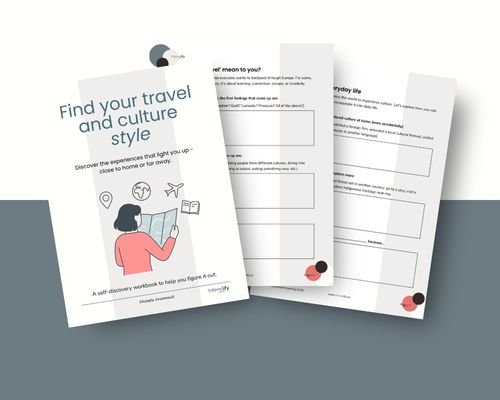
Build clarity with the Find your travel and culture style workbook
When this is right for you: You’re tired of trips that look good on paper but don’t quite land. You want to understand why certain trips energize you, and others leave you flat, and you’re ready to think a bit more intentionally before you book your next one.
How this can help: This workbook walks you through identifying your travel values, preferences, and patterns, so you can plan trips that actually match who you are.

Make lasting change with the Be intentional about your travel and cultural experiences blueprint
When this is right for you: You want more than better trips, you want travel to play a meaningful role in your life. You’re ready to slow down, reflect, and intentionally design experiences that align with your values, energy, and season of life.
How this can help: This self-paced coaching program guides you through redefining how travel fits into your life, from clarifying your deeper intentions to designing experiences that feel grounded and fulfilling. You’ll learn how to travel in a way that builds connection, insight, and confidence, not just memories and photos.
Get personal support with one-on-one coaching
When this is right for you: You want experiences that feel meaningful and aligned with who you are, not rushed itineraries or trips planned around what you think you “should” see or do.
How this can help: Together, we’ll clarify your travel values, identify what kind of experiences help you feel present and connected, and learn how to design trips that reflect your interests, energy, and season of life. You’ll walk away with a clearer sense of purpose and better planning decisions for travel experiences that leave a lasting impression long after the photos are taken.
You don’t have to travel farther to travel better. You just have to pay attention to what you notice, what you value, and what moves you.
Meaningful travel isn’t a destination; it’s a practice. And every time you choose ‘intention’ over ‘autopilot’, you bring home something more valuable than souvenirs; you bring home perspective.
FAQ - Questions my clients ask
-
No. Purposeful travel has very little to do with distance.
The intention behind your choices matters more than how far you go. A weekend road trip, a day exploring a nearby town, or even a staycation can be deeply meaningful when you’re clear on what you want to experience and why. Many clients are surprised to find their most satisfying “travel” moments happen closer to home, once they stop rushing and start choosing on purpose.
-
Not at all.
Purposeful travel isn’t anti-sightseeing. It just asks you to be selective. You can still visit landmarks, museums, or popular spots, but you’re choosing them because they align with your interests, not because they’re on a must-see list. The difference is intention, not restriction.
-
This comes up a lot.
Purposeful travel doesn’t mean everyone has to want the same thing. It means you’re aware of your needs and advocate for them alongside others. That might look like building in solo time, alternating activity types, or agreeing on one shared intention for the trip. When expectations are named early, trips tend to feel less tense and more cooperative.
-
Absolutely not.
Photos aren’t the problem. Disconnection is. If photography helps you slow down, notice details, or remember meaningful moments, it can support purposeful travel. It only becomes an issue when documenting replaces experiencing. Many clients simply adjust when and how often they reach for the camera, rather than giving it up entirely.
-
You don’t figure it out all at once.
Most people learn through reflection and small experiments. Looking at past trips, noticing patterns, and trying one or two intentional changes at a time builds clarity quickly. That’s why starting with awareness and low-pressure actions works better than redesigning everything at once.
-
Purposeful travel works especially well when resources are limited.
When time or money is tight, intention helps you focus on what matters most instead of trying to do everything. Short trips, off-season travel, local experiences, or even cultural exploration at home can still provide connection, insight, and renewal. Meaning doesn’t scale with spending.
-
Both.
Planning with intention changes what you choose, how you pace yourself, and what you prioritize while you’re there. That directly affects how your body feels, how present you are, and how satisfied you feel afterward. Many clients also notice the mindset carries into everyday life, helping them make more intentional choices outside of travel too.
You might also like…





Think travel has to be expensive? Think again. These 10 creative ideas will help you explore, adventure, and soak up culture without emptying your wallet.