
Reset your garden for fall without getting overwhelmed
Bring life back to your yard with just a few simple steps.
Time to buy a leaf blower.
Why a Fall garden reset helps more than just your yard
By the end of summer, your outdoor space might feel a bit... neglected. Maybe the weeds got away from you. Maybe the planters are struggling. Maybe every time you walk outside, it just feels like one more thing you should deal with.
But this isn’t just about your plants. The space around you affects how you feel, especially when it’s the first thing you see coming home or the last thing you notice before heading in for the night.
When your yard feels chaotic, it can quietly add to your mental load. It becomes background stress: another thing left unfinished. Another visual reminder that you’re behind. That low-grade noise can take a real toll.
A quick garden reset gives your brain a win. It shifts the space from something you avoid to something that supports you. Even a few small changes like clearing a corner, tossing dead plants, and prepping one bed can create a sense of calm and control that spills into the rest of your day.
This guide isn’t designed to give you a perfect garden. That’s not the goal. The goal is to do a little bit to improve the space, on purpose.
Step 1: Reflect on how much your outdoor space is affecting your peace of mind.
You might not think of your front yard or patio as a source of stress. But if you’ve been avoiding the garden, wincing at the weeds, or feeling guilty every time you walk past a dying planter, your nervous system is already taking a hit.
Reflection activity
Let’s pause and name it:
Does your yard make you feel calm or overwhelmed?
Do you avoid going outside or looking too closely?
Are you carrying guilt for “not keeping up” with it?
Have you been telling yourself you’ll “fix it later,” but it keeps falling to the bottom of the list?
That’s emotional clutter. And like physical clutter, it piles up.
Step 2: Make one small shift (and stop letting your yard steal your energy).
You don’t need a weekend marathon or a trip to the garden center to feel better. A few strategic changes can shift how the space feels and how you feel, right away.
Tiny missions
Here are three doable starting points:
Mission #1: Remove one source of tension
That planter of dead mums? The broken birdbath you keep meaning to fix? Let it go. Removing just one eyesore lowers your stress every time you step outside.
Mission #2: Tidy one high-traffic spot
Focus on what you see the most, like the front steps or the path to the car. A quick sweep, a pulled weed, or fresh mulch in just one spot can give you an immediate visual win.
Mission #3: Add one thing that brings life
Plant something low-maintenance for fall, like pansies, kale, garlic, or even a potted herb. Just one addition can shift your mindset from “ugh” to “ahh.”
Choose small actions that give you energy back. Instead of pushing through, let’s acknowledge what’s there and take one small step toward reclaiming it.
Resources worth exploring
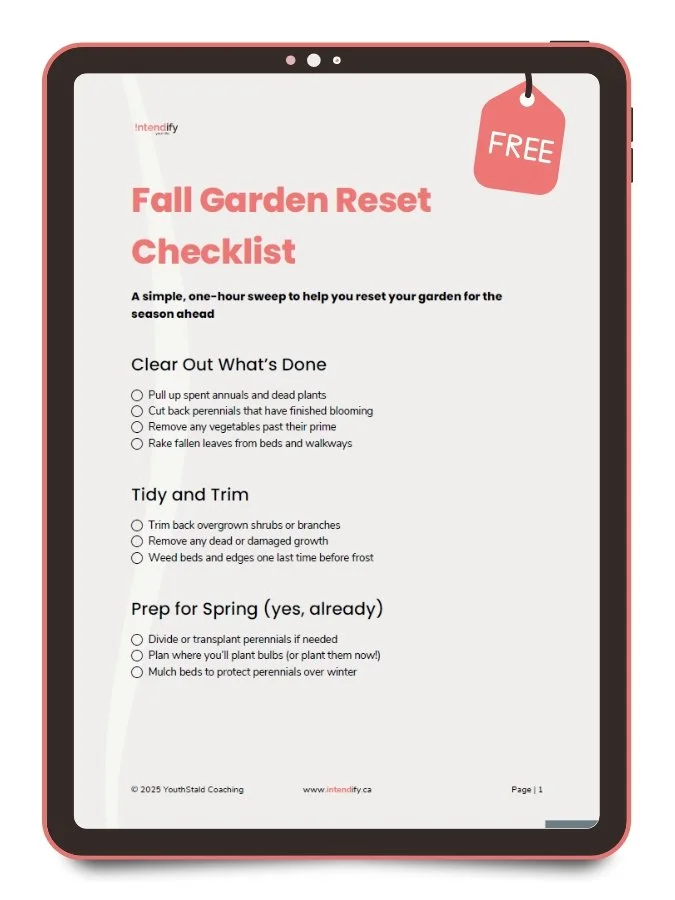
FREE Tool: Fall Garden Reset Checklist
Use the checklist to stay focused and make progress.
Books worth exploring
The Garden Awakening: Designs to nurture our land and ourselves by Mary Reynolds
Explores how gardens can be soulful, healing spaces and includes practical and emotional strategies.The Wild Remedy Journal: Finding Wellness in Nature by Emma Mitchell
A mix of nature journaling and mental health support. Great for anyone struggling with seasonal shifts.Down to Earth: Gardening Wisdom by Monty Don
A friendly, reflective book about seasonal rhythms in the garden; beautifully written and not intimidating at all.Braiding Sweetgrass: Indigenous Wisdom, Scientific Knowledge and the Teachings of Plants by Robin Wall Kimmerer
A deeper, more poetic look at our relationship with nature. Think less “gardening tips,” more “life lens.”Grow Green: Tips and Advice for Gardening with Intention by Jen Chillingsworth
Packed with easy tips and advice, this little book reveals how to adjust your outdoor space and create a wildlife haven, while reducing your impact on the environment as you grow your own cut flowers, fruit, and veg.
Podcasts worth exploring
The Slow Home Podcast with Host: Brooke McAlary
Helps connect home and lifestyle choices with intentional, seasonal rhythms.A Way to Garden with Host: Margaret Roach
Combines practical advice with a deeply personal, calming tone.
Websites and Apps worth exploring
The Spruce: Accessible articles with step-by-step ideas for cleaning up and prepping your yard.
Savvy Gardening: Canadian-based and realistic; lots of tips for low-maintenance fall prep and container gardening.
PictureThis: App for plant ID + care tips
Great for identifying what’s thriving vs. what’s not worth savingiNaturalist: App for nature exploration
Makes it fun to notice what’s living in your yard beyond your plantings. Great for families or nerdy nature lovers

Michelle Arseneault is a certified life coach and instructional designer who loves helping women understand why life feels harder than it needs to, and what to do about it.
“I believe small, thoughtful changes usually have a bigger impact than dramatic overhauls. Around here, you'll usually find me exploring the psychology behind everyday life, creating practical tools, or asking questions that help you see things from a new angle.”
You might also like…

Ever feel like you have no choice but to accept things as they are? Intentional living starts with recognizing the influence you have over your life, even when your options aren't particularly appealing. Here's how to begin.