
Why your home feels draining (and how to make it work for the way you actually live)
This guide isn’t theory. It’s shaped by years of coaching sessions, real conversations, and the practical shifts that people tested until they found what actually works.

If your home feels exhausting instead of comforting, it usually isn’t because it’s messy, cluttered, or poorly managed.
Most of the time, it feels draining because it has been set up to look “right” rather than to support how people actually live in it. When a home is designed primarily for appearance, daily activities don’t have clear places to happen or clear places to land when they’re done.
As a result, items come out to be used, get moved around repeatedly, and then get hidden away again so the room can look presentable. This cycle repeats throughout the day and quietly turns the home into ongoing work.
People often blame themselves for this. They assume they are disorganized, inconsistent, or failing to maintain their space properly. In reality, they are trying to live in a home that isn’t designed to support real use.
This guide helps you understand why that mismatch is so tiring and how to redesign your home so it supports daily life instead of creating friction.
What designing a practical home really means
Meeting this goal doesn’t mean creating a polished, minimalist, or magazine-ready home. It means creating a practical home, which is a home designed around use rather than appearance.
A practical home is built by paying attention to what actually happens in each space and then giving those activities clear, obvious places to live. Instead of asking how a room should look, you start asking how the room is being used and what makes that use easier or harder.
When a home is practical:
Everyday activities have dedicated places instead of floating from room to room
Items that are used regularly do not need to be hidden away to keep the space functional
Rooms require less resetting because they already support what happens in them
The home works even on tired days, busy weeks, or low-capacity seasons
The mental load of managing the space is shared by the environment instead of carried by one person
This is not a lower standard. It is a more realistic one that reduces effort instead of increasing it.
What this looks like in real life
When a home is designed for real use instead of presentation, everyday patterns start to make sense instead of causing frustration.
Items that are always out are no longer treated as problems that need fixing. Instead, they’re recognized as signals that an activity needs a proper home.
Rooms begin to communicate their purpose clearly. A person can walk into the space and immediately understand what happens there and where things belong.
Surfaces stop feeling like clutter magnets because they have defined jobs. When a surface is meant to hold certain items, those items no longer feel out of place, even when they’re visible.
Over time, the same mess stops being cleaned up repeatedly because the space is no longer fighting the behavior that creates it.
The home still shows signs of life. What changes is that it stops demanding constant correction.
Erin’s story (with permission)
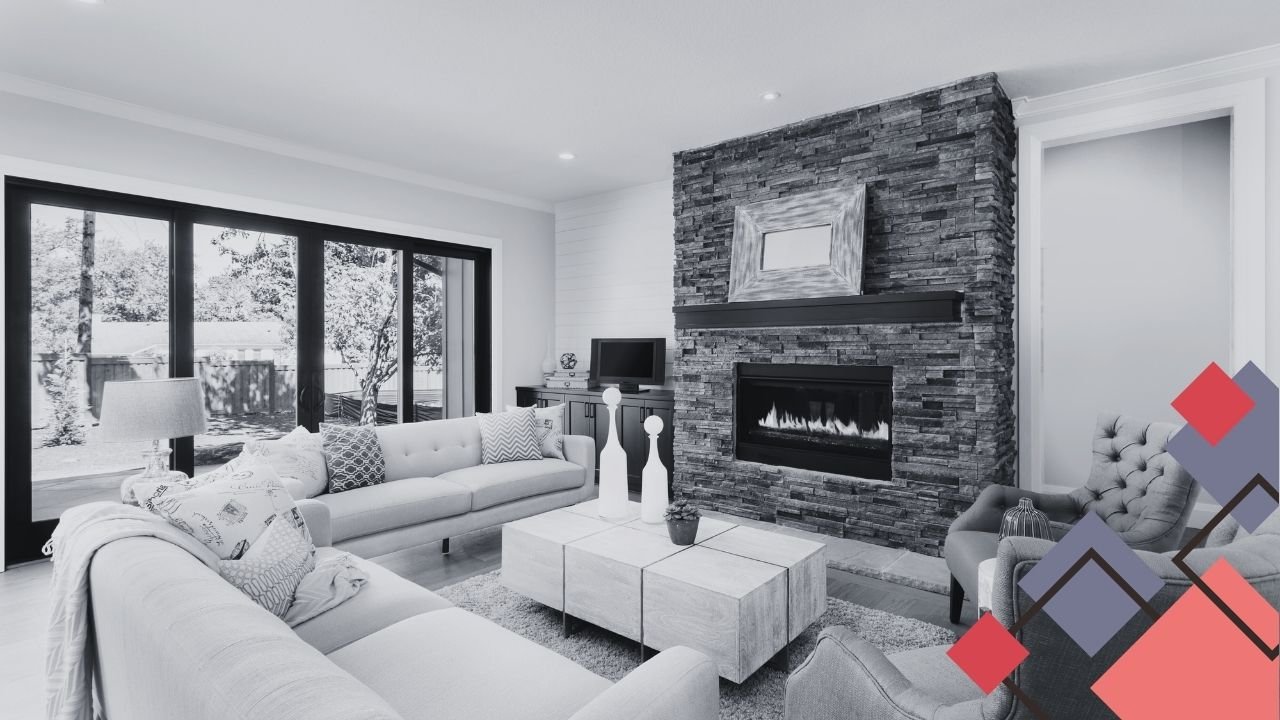
When Erin came to coaching, the living room was the source of most of her stress. It was the first room people walked into when entering the house, so she felt pressure to keep it tidy and visually appealing at all times. She wanted the room to feel calm and welcoming, but instead it felt like a space she was constantly managing.
Her husband’s game console was always out because he used it daily. Controllers were often on the floor or tucked under the couch. Her child’s toys ended up in the living room because that was where everyone naturally gathered. Books and notebooks landed on the coffee table because that was where reading and relaxing happened.
To keep the room looking “nice,” she repeatedly hid these items away. She cleared the coffee table. She gathered toys. She tucked controllers out of sight. She did this multiple times a day.
Each reset felt temporary, and each new mess felt like a failure to maintain control. Over time, this created tension. She felt like no one respected the space. Her husband felt criticized. Her child felt corrected. The room that was meant to be relaxing became a source of conflict.
When we looked at the living room together, the problem became clear. The room had been designed to look good, not to support how it was actually being used. Instead of trying to keep it tidy, we redesigned it to be practical.
The game console was given a clear, visible home, with controllers stored in a way that made it obvious where they belonged. Toys were given a dedicated station that allowed for easy access and easy cleanup in the room where play actually happened. The coffee table was intentionally used as a place for books instead of being treated as a surface that needed to stay empty.
The room did not become perfect. What changed was that it finally matched reality.
A few weeks later, Erin said she no longer reset the living room throughout the day. The family used the space without constant tension, and the fights about the mess stopped because the room no longer relied on her to manage everyone else’s behavior.
Why this matters
When items don’t have clear, obvious homes, the brain treats them as unresolved tasks. Each time you see the item, your attention is pulled toward it because your brain is trying to decide what should happen next. This creates mental noise, even when nothing is actively being done.
Over the course of a day, this looks like repeatedly noticing the same objects, moving them from place to place, and mentally tracking what still needs to be put away. None of these actions are large on their own, but together they create ongoing cognitive load.
A supportive home reduces this load by making the purpose of each space and each item clear. When it is obvious where something belongs, the decision is already made, and the brain no longer has to stay engaged.
This is why practical design feels relieving. The space starts doing some of the work that was previously happening in your head.
You might be thinking
-
What this usually means
When people say their home is too small for stations, they’re often imagining stations as additional furniture, dedicated corners, or elaborate setups that take up space. In reality, the concern is usually about visual crowding, not square footage.In smaller homes, activities are already happening everywhere. What’s missing is not space, but clarity. Items are being used without being assigned a clear place to live, so they drift from surface to surface.
What helps you move past it
Stations don’t add things to your home. They define where existing activities already happen. A station can be as small as a tray, a basket, a hook, or a single drawer.Instead of asking where you could fit something new, you look at where things are already being used and give that use a clear boundary.
Quick wins
Choose one activity that happens daily and identify where it already occurs.
Give that activity a visible, defined home using what you already have.
Why this works
When an activity has a clearly defined place, items stop spreading because people no longer have to decide where things belong each time they are used. This reduces repeated tidying and frustration, which is especially important in smaller spaces where drift becomes noticeable quickly. -
What this usually means
This concern usually comes from internalized expectations about what a home is supposed to look like. Many people were taught that a good home appears tidy, neutral, and slightly unused, even if that doesn’t reflect how it functions day to day.When a home is designed for real use, it can feel uncomfortable at first because it breaks that expectation. Items are visible. Activities are obvious. Life shows up in the space.
What helps you move past it
A practical home prioritizes the comfort of the people who live there over the impression it makes on visitors. Most guests feel more at ease in homes where the host is relaxed and not constantly apologizing or tidying mid-conversation.Quick wins
Identify one area of the home you want to keep visually neutral for your own peace of mind.
Allow other areas to reflect real use without trying to make them disappear.
Why this works
When you stop performing your home for others, your body relaxes. That ease is what guests actually respond to, not the absence of visible items. -
What this usually means
This is rarely about the number of items in a room. It’s usually about visual confusion. A room feels cluttered when it’s not clear why items are there or what they’re meant to support.When objects are scattered without obvious purpose, the brain reads the space as unfinished and demanding attention.
What helps you move past it
Instead of trying to reduce visibility, focus on making use obvious. When items are grouped by activity and given intentional homes, the room becomes easier to read, even if things are out.Quick wins
Group items that support the same activity instead of spreading them across the room.
Use containers or surfaces that signal purpose rather than hiding items away.
Why this works
The brain relaxes when it can quickly understand what it’s seeing. Purposeful grouping reduces visual noise because the space explains itself without effort. -
What this usually means
Most people have never been asked to think about their home in terms of behavior. They organize by room type because that’s what they’ve been taught, not because it reflects daily life.This uncertainty usually happens when someone feels overwhelmed and tries to plan their home from their head instead of watching how they actually use the space. Planning too early creates confusion because it’s based on ideals rather than real behavior.
What helps you move past it
You don’t need to invent stations. You need to notice patterns. Stations already exist informally wherever frustration, piles, or repeated cleanup happens.Quick wins
Observe your home for one day without changing anything.
Notice where items naturally land and where activities repeatedly start.
Why this works
When you design systems based on how people actually behave, the system no longer depends on someone remembering to do the right thing or feeling motivated at the right time. The space itself guides behavior, which makes the system easier to maintain consistently.
Where to start

Reflection exercise
Trying to fix your whole home at once usually leads to more overwhelm, not relief. When everything feels like a problem, it’s hard to know where to focus, and people often default to surface-level changes that don’t stick.
A better place to start is by understanding how your home is actually being used right now. Practical changes only work when they’re based on real patterns instead of ideal ones.
Describe your current reality
Start by noticing where your home feels hardest to live in, not where it looks the worst. Pay attention to moments of friction. These usually show up as repeated annoyance, constant resetting, or low-level tension that never quite goes away.
You might notice things like:
a room you keep tidying but never feel finished with
items that are always out because they’re used constantly
spaces that trigger irritation as soon as you walk into them
areas where reminders or arguments keep happening
Write a few sentences about one space that feels draining. Focus on what actually happens there during a normal day, not what you think should happen.
Describe your ideal
Now imagine that same space on an average day, not a perfect one. Think about how you want it to function, not how you want it to look. Ask yourself what would feel easier if the room supported real use instead of resisting it.
You might consider:
what activities you want to happen there without effort
what items you’d want within easy reach
what you wouldn’t need to tidy or move constantly
how the space could reduce reminders, nagging, or tension
Write a few sentences describing what “easier” would look like in that space.
Why this matters
These two descriptions give you something important: contrast.
When you can clearly see the gap between how a space is being used and how you want it to support you, the next steps become clearer. Instead of guessing what to fix, you can focus on giving the most frustrating activity a clear, practical home.
This approach works because it targets the source of friction rather than the symptoms. By designing for real use first, you reduce how much effort it takes to keep the space functioning.
Write down your thoughts before you scroll on. When you’re ready for more support, choose the next step that feels right for you.
Do you want support with this?

Get personal support with one-on-one coaching
When this is right for you: You know your home feels draining, but you’re stuck trying to make it look “right” instead of making it work. You’ve tried organizing, decluttering, or resetting rooms, and nothing sticks because the space still doesn’t match how you and your family actually live.
How this can help: In one-on-one coaching, we slow things down and look at your home through a practical lens. We identify the activities that are creating the most friction, uncover why your current setup isn’t supporting them, and design clear, realistic stations that fit your space, your energy, and your capacity. You’ll leave with a plan that reduces daily effort, lowers mental load, and helps your home support you instead of relying on you to manage everything.
You might also like…




Your tech life could be making you tired. This article explains how digital clutter affects your brain and gives simple ways to reclaim your focus.